 |
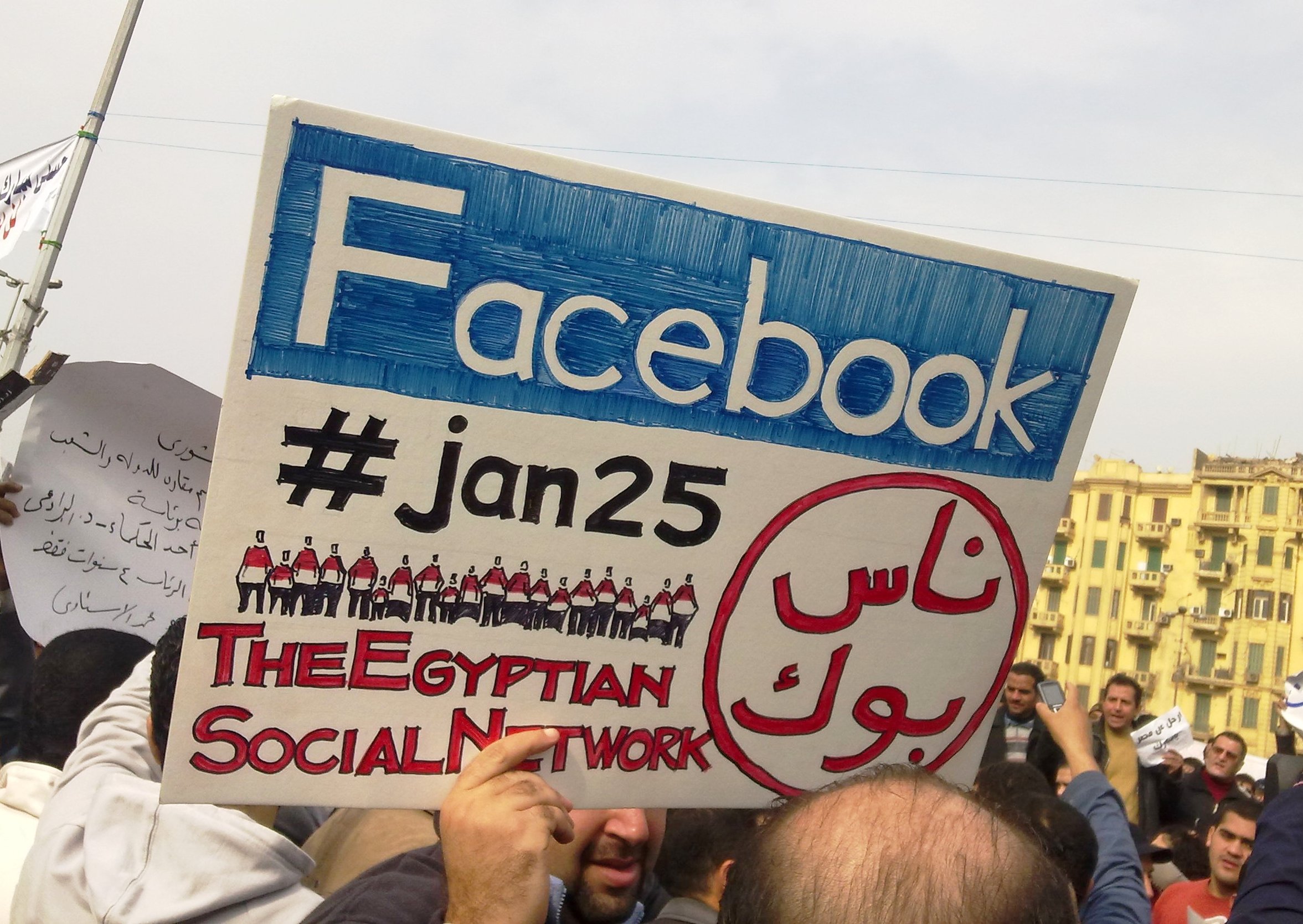
In 2011, Egyptian protesters connected using Facebook
Image
credit: Essam Sharaf (CC BY-SA 3.0)
|
The Democratizing Influence of Digital Media
The significance of emerging electronic communications media on the political process and democracy has become evident with the role social media in particular have played in recent global events:
A recent report by PEW found signs that social networks may be encouraging younger people to get involved in politics. You only need look at Twitter's recent impact on the Iran elections, the Orange Revolution in Ukraine, and even the election of Barack Obama to see that more and more people are getting involved in politics and are feeling they can make a difference. (Laurie, 2010, para. 9)
Technology's Role in the Arab Spring Protests (FORA.tv)
By giving voice to those who may have felt marginalized in the past, new communications technologies are empowering average citizens to become more involved and diminishing individuals' apathy and cynicism. In some cases, they are permitting oppressed peoples to circumvent the state-imposed censorship and information control that has kept them subjugated, helping rebel groups orchestrate the overthrow of despotic regimes.
Digital Campaigning 101: Politicians Learn to Harness the Web
Successful politicians have always required excellent communications skills; they need to effectively share their message and cultivate their public persona in order to be elected in the first place, and their public servant roles entail extensive dialog with constituents, lobbyists, and fellow politicians in committees, hearings, and other deliberative sessions. Within the past few election cycles, politicians have found it imperative to get training on how to use new media tools in their campaigns—or at least to recruit members of their campaign staff who do.
 |
| Graphic credit: Chris Visco |
Recap
Social networking sites and digital media are not just for sharing amusing cat videos; they are unsettling the political process and toppling regimes. Individual citizens are learning to organize, communicate, and educate themselves through these new channels, and politicians are using them to mobilize support and generate interest in their campaigns.
_______________
References
Johnson, T., Zhang, W., Bichard, S., and Seltzer, T. (2011).
United we stand? Online social network sites and civic engagement. In Z. Papacharissi
(Ed.), A networked self: Identity,
community, and culture on social network sites (pp. 232-250). New York:
Routledge.
Laurie, M. (2010, January 7). How social media has changed us. Mashable.com. Retrieved from http://mashable.com/2010/01/07/social-media-changed-us/
Vatikiotis, P. (2014). New media, democracy, participation
and the political. Interactions: Studies
in Communication & Culture, 5(3), 293-307. doi:10.1386/iscc.5.3.293_1

No comments:
Post a Comment