Sunday, August 30, 2015

Social Expectations of Mass Media: Cultural Impact of Web and Mobile Developments

Mobile and Web 2.0 advancements have transformed digital culture
Image credit: Jason Howie (CC BY 2.0)
After a relatively slow commercial start in the 1990s, Internet and web-based media have proliferated and gained tremendous social, commercial, and political influence in the last decade. The rise of Web 2.0 technologies, smartphone and tablet applications, and mobile-optimized web pages--as well as a host of services utilizing them--has profoundly shaped the culture of modern first-world societies. While these information and communication technologies have offered consumers improved entertainment, heightened business productivity, increased convenience, and unimaginable access to timely information, they have also proved valuable to corporate and government interests and resulted in less desirable social and psychological consequences.

Social media are indispensable government communication tools
Source: Spotlight Communications
BUSINESS AND GOVERNMENT USE OF SOCIAL MEDIA

Once the province of classmates, friends, family, and occasionally colleagues, so-called social media now play significant roles in decidedly non-social interactions. Mickoleit (2014) states that "Social media have the potential to make policy processes more inclusive and thereby rebuild some confidence between governments and citizens" (p. 3), enabling politicians, agencies, and government bodies to "deliver better public services and to create more open policy processes" (p. 1). Because social media may be accessed via smartphones, they are particularly valuable communication tools for local governments during times of crisis or emergency, when citizens may be away from their homes or power outages might make television and radio announcements useless. Businesses, too, have turned to social media, using various platforms to foster the development of the brand identity, interact with consumers, and offer special promotions. Occupying the space between the personal and the public, the private and the professional, employees have turned to new digital platforms for professional advancement. Gilpin (2011) notes that social media serve “multiple purposes for practitioners, such as information sharing, networking, and establishing professional expertise.” She points to Twitter in particular as “a boundary- blurring tool that links multiple online spheres and spans the divide between offline and virtual professional domains” (p. 323). While social media may have their origins in the realm of personal interaction, they have found a place in the working world as well.

The Fear of Missing Out

SOCIAL AND PSYCHOLOGICAL CONSEQUENCES

For all their convenience and value in providing information and entertainment, web and mobile digital communications technologies are being increasingly attributed as the source of emotional and psychological trauma including depression related to the perception of unattainable standards, overwhelming nostalgia, and the "fear of missing out." Milbourne and Wilkinson (2015) write that "social media connectedness is currently gaining attention by scholars and practitioners alike," claiming that internet technologies may "[erode] the number of close relationships, [create] isolation, [and produce] loneliness" (p. 2). This may manifest itself in the FOMO, or the fear of missing out: “the pictures from parties and other events that are posted on social media often look better and more exciting than what really happened, and for teens and young adults that will always be a problem” (“Seen at 11,” 2015, para. 12). Because what is posted on social media sites is at the discretion of the individual, it often represents a highly-edited construction rather than accurate representation of reality. Young adults in particular may benefit from better mechanisms by which to be informed about such matters as digital culture puts increasing emphasis on these virtual constructions of the self.

_______________
References

Mickoleit, A. (2014). Social media use by governments: A policy primer to discuss trends, identify policy opportunities, and guide decision makers. OECD Working Papers on Public Governance, No. 26. Retrieved from http://www.keepeek.com/Digital-Asset-Management/oecd/governance/social-media-use-by-governments_5jxrcmghmk0s-en#page1

Milbourne, C. C., Wilkinson, J. S. (2015). Chasing Infinity: The Fear of Disconnecting. American Communication Journal, 17(2), 1-14.

Gilpin, D.R.(2011). Working the Twittersphere: Microblogging as a professional identity construction. In Z. Papacharissi (Ed.), A networked self: Identity, community, and culture on social network sites (pp. 232-250). New York: Routledge.

Seen at 11: Can social media be a source of digital anxiety? (2015, May 13). CBS New York. Retrieved from http://newyork.cbslocal.com/2015/05/13/seen-at-11-digital-anxiety-fomo-social-media/

Social Expectations of Mass Media: Cultural Impact of Broadcast Media Advancements

Broadcast media have evolved in response to digital developments
Image credit: Suzie (CC0 1.0)
The digital age has ushered in a consumer culture in which more choices, fewer commercial advertisements, and better quality are the norm. In contrast to the "push" model of traditional broadcast media in which audiences had to select from a limited number of predetermined programs with commercial interruptions, today's digital "pull" model is based on consumers' expectation to view and listen to movie, television, and radio content on demand. While many services offer free access to customers who agree to receive advertisements, they typically allow convenience-minded users to circumvent these ads for a small premium.

How is Digital TV Different from Analog?

On-Demand Entertainment
(Click to enlarge)
Source: ninjametrics.com
DIGITAL TELEVISION, RADIO, AND VIDEO ON DEMAND

Two key technological developments have transformed the way in which audiences consume the traditional broadcast media of television and radio: the transition from analog to digital TV and the rise in Internet-provided streaming and downloading services. According to the FCC, “Digital Television (DTV) is an advanced broadcasting technology that […] enables broadcasters to offer television with better picture and sound quality, and multiple channels of programming” (“Digital Television,” n.d., para. 1). Goldfarb adds that, "with the digital transition, broadcasters are able to broadcast multiple video programming streams, rather than a single stream” (p. 115), enhancing media companies' offerings. Video-on-demand (VOD) services such as Netflix, Hulu, and Amazon Instant Video make available television programs that are not even on the airwaves, allowing users to view TV episodes from years past and "binge watch" entire seasons of their favorite series. Satellite radio channels and music services like Pandora take are the radio equivalent of these TV offerings, catering to a digital consumer culture that enjoys and has come to expect convenient, high-quality, low-interruption entertainment.

CHALLENGES

The benefits afforded media consumers by new digital technologies are not without tradeoffs. A relatively small number of national and global corporations control a large percentage of these digital markets, creating several drawbacks compared to the former analog broadcast system. Goldfarb (2011) writes that “Market and technological changes are creating challenges to the long-standing business models employed by broadcast television networks and local television stations [and] affecting the three pillars of U.S. government media policy—localism, diversity of voices, and competition” (p. 112). He notes that, even though the amount of local programming is actually on the rise (because it is cheaper to produce than other content), viewership is down. Media power is increasingly being consolidated in the hands of fewer major players, potentially stifling the consumer benefits of a competitive market and limiting audiences' exposure to a variety of perspectives about important social issues. In order to mitigate such detrimental outcomes, citizens and consumer advocacy groups must be vigilant for corporate and governmental overreach and maintain a persistent and forceful campaign to increase awareness about media consolidation, lobby for sensible political reform, and raise the alarm should organizations abuse their power.

_______________
References

“Digital Television.” N.d. Federal Communications Commission. Retrieved from https://www.fcc.gov/digital-television

Goldfarb, C. B. (2011). How changes in the economics of broadcast television are affecting news and sports programming and the policy goals of localism, diversity of voices, and competition. Journal of Current Issues In Media & Telecommunications, 3(2), 111-144.

Social Expectations of Mass Media: Cultural Impact of Print Media Trends

Newspapers and magazines have faced challenges in a digital age
Image credit: Susan Lesch (CC BY-SA 3.0)
New technologies do not merely influence culture through their own benefits and drawbacks but also through the ways in which they shape existing technologies. Mobile and Web 2.0 communications media have had this kind of transformative impact on so-called "traditional" print media like books, magazines, and newspapersas Wikström and Ellonen (2012) explain, "Today, print media firms find themselves in a radically different business environment where long-term survival is difficult without continuous and aggressive innovation" (p. 64). Many new outlets have adopted web sites, social media platforms, and mobile applications to supplement their print media in light of the ways in which "Internet technologies [... have] rapidly increase[d] the importance of their online services" (p. 63). Print media have both changed as a result of social pressures and helped shape cultural changes themselves. While many positive innovations have arisen from traditional media organizations' reaction to digital culture, print-based publishers face many challenges as they adapt to shifting consumer demands.

News publications lose subscribers but gain online readership
Source: NewsGroup4.com, via OpusFidelis.com
CHANGING EXPECTATIONS

Digital consumers expect 24/7 access to information through a variety of electronic devices, and print publications are struggling to adapt to these new consumer demands. Some revered print publications, including the stalwart Newsweek, have moved to entirely digital formats ("Digital Media," 2012, para. 5), while others have stepped up their online presence. As this NewsGroup4.com infographic shows, the Washington Post lost 3.2% of its Sunday circulation in 2011 but boasted 9.5 million unique visitors to its web version, illustrating how print-based organizations can offset lost print readership by embracing web and mobile channels. An OPUSfidelis article (2012) advocates not merely supplementing print media with on online presence but actually reversing the model altogether, arguing that "A 'digital first' approach is rapidly becoming the only approach for most firms to continue doing business" ("Digital Media," para. 1). Citizens in this digital society still respect the authority of traditional publicationsthey just prefer to consume that news in digital format.

WEB AND LEGACY MEDIA CROSS-INFLUENCE 

As readers grow accustomed to online formats, some magazines and newspapers have adopted layout designs influenced by web trends, with bolder typefaces, increased reliance on visuals, and infographic-style illustrations. Hodgkin (2014) writes that "The magazine industry has been a textbook case of this disruptive innovation in the way that the established industry leaders have reacted to the opportunity presented by mobile devices and tablet technology" (par. 6), with digital editions designed to exploit touchscreen capabilities, search functions, and social sharing and print versions often mimicking the look and feel of their electronic counterparts. In a surprising twist, however, some digital outlets are reverting to a more traditional aesthetic: “the new Bloomberg site actually feels more like its print magazine counterpart than a typical web site [….] The text overlay happening with the coverlines is a cue taken from magazine covers and page layouts” (Rhodes, 2015, para. 5). Consumer culture is thus torn between competing impulses: while readers demand greater accessibility, novel design, and convenience, they also long for the stability and comfort of traditional outlets. A Bloomberg Business "Debate Room" feature considers whether "The Print Media Are Doomed," but digital and print versions of the same publications have so far been able to coexist, despite the inroads web and mobile publishing has made in traditional paper-based sales.


Print media's influence can't be discounted
_______________
References

"Digital media is beginning to eclipse traditional media." (2012, October 18). OPUSfidelis. Retrieved from http://opusfidelis.com/insights/ digital_media_is_beginning_to_eclipse_traditional_media/

Jarvis, J., and Tolles, C. (2008, December). The print media are doomed. Bloomberg Business. Retrieved from http://www.businessweek.com/debateroom/archives/2008/12/the_print_media_are_doomed.html

Rhodes, M. (2015, February 2). Haters to the side: Bloomberg’s loud redesign heralds the future of web news. Wired. Retrieved from http://www.wired.com/2015/02/haters-side-bloombergs-loud-redesign-touts-future-web-news/?mbid=social_gplus#slide-id-1718979

Wikström, P., & Ellonen, H. (2012). The impact of social media features on print media firms' online business models. Journal of Media Business Studies 9(3), 63-80.

Sunday, August 9, 2015

Digital Technology and Communications Jobs: Politics

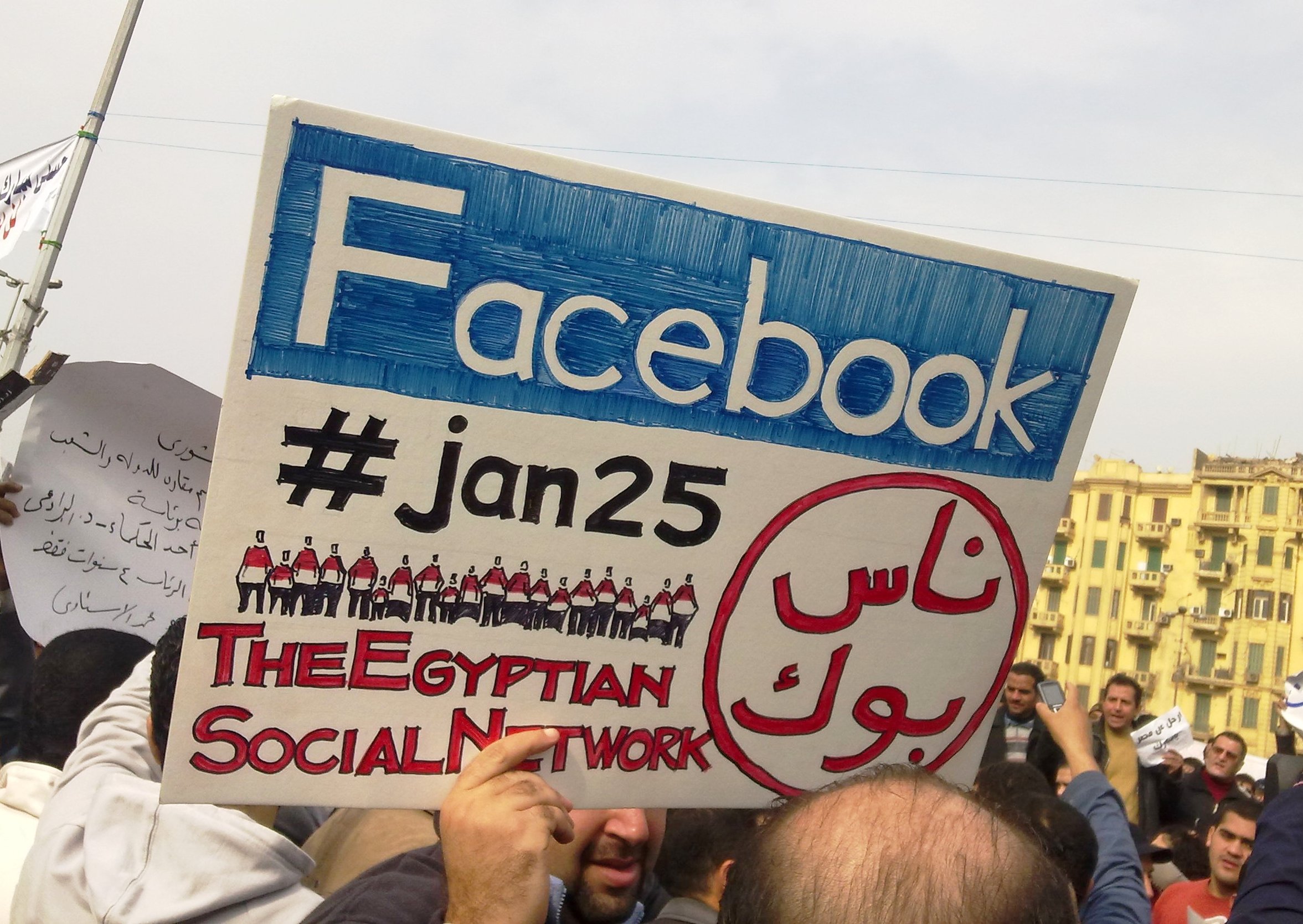
In 2011, Egyptian protesters connected using Facebook
Image credit: Essam Sharaf (CC BY-SA 3.0)
Over the past decade, politicians have increasingly discovered the importance of developing digital communications skills to leverage the power of social media and other digital communications in a hyperspeed world of 24/7 news coverage, truncated news cycles, and sound-bite culture. By the same token, citizens have also discovered the power of such tools in helping them mobilize against oppressive governments and in support of policies or campaigns they back. Vatikiotis (2014) writes that "the newer communication and civic habits developed along the various aspects of engagement in networked media practices [...] apply to a broader understanding of the concept of 'the political'" (p. 301)—in other words, new media are not merely enabling political action, but also changing the very nature of the social order.

The Democratizing Influence of Digital Media


The significance of emerging electronic communications media on the political process and democracy has become evident with the role social media in particular have played in recent global events:
A recent report by PEW found signs that social networks may be encouraging younger people to get involved in politics. You only need look at Twitter's recent impact on the Iran elections, the Orange Revolution in Ukraine, and even the election of Barack Obama to see that more and more people are getting involved in politics and are feeling they can make a difference. (Laurie, 2010, para. 9)
Technology's Role in the Arab Spring Protests (FORA.tv)

By giving voice to those who may have felt marginalized in the past, new communications technologies are empowering average citizens to become more involved and diminishing individuals' apathy and cynicism. In some cases, they are permitting oppressed peoples to circumvent the state-imposed censorship and information control that has kept them subjugated, helping rebel groups orchestrate the overthrow of despotic regimes.

Digital Campaigning 101: Politicians Learn to Harness the Web

Successful politicians have always required excellent communications skills; they need to effectively share their message and cultivate their public persona in order to be elected in the first place, and their public servant roles entail extensive dialog with constituents, lobbyists, and fellow politicians in committees, hearings, and other deliberative sessions. Within the past few election cycles, politicians have found it imperative to get training on how to use new media tools in their campaigns—or at least to recruit members of their campaign staff who do.

Graphic credit: Chris Visco
Johnson, Zhang, Bichard, & Seltzer (2011) note that 2008 was heralded as "the Facebook Election where the top-down style of political campaigning was replaced by the grass-roots dynamic of online social networks, particularly Facebook and YouTube" (p. 185). Barack Obama in particular recognized the potential of social media and video, recruiting a campaign team adept with digital tools in order to create YouTube videos spreading his message, emails and social media solicitations of donors, and a website that not only outlined his platform but also helped mobilize volunteers. Although his challengers, most notably Hillary Clinton and John McCain, likewise attempted to tap into the power of new media, "Political observers indicated that Obama had a dominating presence on social network sites and used them as a mechanism to get people involved in his campaign" (Johnson et al., 2011, p. 201). Obama had an even stronger advantage in the 2012 election (see graph). Going forward, politicians who wish to be serious contenders for office need to learn from and improve upon the social networking and digital media techniques used in the most recent election cycles.

Recap

Social networking sites and digital media are not just for sharing amusing cat videos; they are unsettling the political process and toppling regimes. Individual citizens are learning to organize, communicate, and educate themselves through these new channels, and politicians are using them to mobilize support and generate interest in their campaigns.

_______________
References

Johnson, T., Zhang, W., Bichard, S., and Seltzer, T. (2011). United we stand? Online social network sites and civic engagement. In Z. Papacharissi (Ed.), A networked self: Identity, community, and culture on social network sites (pp. 232-250). New York: Routledge.

Laurie, M. (2010, January 7). How social media has changed us. Mashable.com. Retrieved from http://mashable.com/2010/01/07/social-media-changed-us/

Vatikiotis, P. (2014). New media, democracy, participation and the political. Interactions: Studies in Communication & Culture, 5(3), 293-307. doi:10.1386/iscc.5.3.293_1

Digital Technology and Communications Jobs: Big Business

Web and mobile tech has become indispensable to business 
Image credit: Gerd Altmann (CC0 1.0)
While the commercial applications of the Internet were limited in the late 1990s and early 2000s, developments in the past decade have revolutionized sales, marketing and brand management, customer service, and lead generation practices. "Thanks to the advent of the Internet and, more specifically, the rise of web-based tools and technologies," write Handley and Chapman (2012), companies have "an enormous opportunity to engage directly with [their] customers or would-be customers" (p. xvii). Along new digital communications technologies have offered much to businesses and organizations, they also present the potential for simple mistakes and oversights to quickly blossom into widespread public relations disasters, necessitating the hiring of communications professionals with more diverse skills sets and the training of even non-communications personnel in matters of appropriate digital media usage.

A Changing Marketplace

While traditional print and broadcast media remain an integral part of modern advertising strategy, digital channels have become increasingly useful as social media and mobile applications have gained widespread acceptance by the public at large. Laurie (2010) comments that “Marketing and advertising is transforming itself from an industry reliant on mass market channels to one which must embrace the power of the consumer and (attempt to) engage in conversations” (para. 12). Companies are discovering that having a clear social media plan, developing engaging content, and optimizing their web presence to increase search engine traffic (as described in detail in the video below) are as important as advertising via billboards, television, and print periodicals.


Top Five Social Media Marketing Trends for 2015 (Engage Target Media)

New Opportunities for Communications Professionals

Organizations have long employed spokespeople, public relations experts, speakers, writers, and other communications professionals to present polished and carefully-crafted corporate statements. In the past decade, a host of new job titles have been added to the ranks of these marketing gurus, including community managers and social media managers. These nascent roles make use of new media to engage in content marketing, customer service, and "e-word of mouth" advertising.

With content marketing, organizations offer free information to consumers via blogs, websites, podcasts, and videos. Doing so provides a service to the audience, establishing the organization's credibility and potentially generating sales leads in the process.

Businesses have also found new opportunities for customer service and promotions via social media. Because disgruntled customers often turn to social media like Facebook and Twitter to vent their frustrations, some companies are monitoring the web for new posts containing targeted keywords so that they may engage in real-time customer interactions and alleviate customers' problems.

Levy and Gvili (2015) describe "e-word of mouth" advertising
marketing strategies designed to elicit word of mouth (WOM) communications about products and services “on a variety of interactive media platforms, including social media, e-mails, web forums, blogs, and digital-virtual worlds” as a popular technique for developing brand awareness. They also explore the strange new concept of “artificial e-WOM”—an electronic word-of-mouth message “that is originated by marketers who then try to disguise its genuine source” in order to improve its “perceived credibility” (p. 95). While some of these strategies are shunned by organizations not wishing to alienate potential customers or business partners, all are examples of ways in which digital technologies have changed the role of communications professionals in business.

Infographic credit: Mindflash
The Need for Employee Training

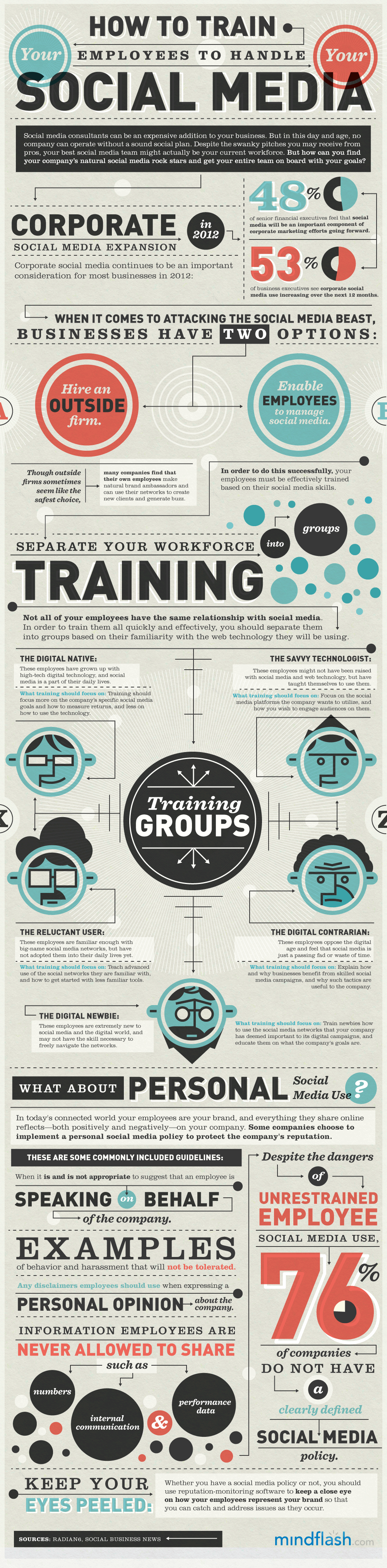
Although there are tremendous benefits to maintaining an online presence, both that corporate branding vehicle and employees' individual social media accounts present potential challenges. Thoughtful effort must be given to company policies designed to prevent public relations disasters and protect the privacy of both corporate secrets and consumer data. Because a company's employees might have their own social media accounts, many businesses feel it necessary to provide advice on responsible use of the platforms to all their workers, not just those in communications
. Jennings, Blount, and Weatherly (2014) explain that, as "organizations use various forms of social media to improve the bottom line and maximize profits, individuals tend to share details of work and private life on social networks that broadcast information to thousands" (p. 97). In order to avoid possible consumer backlash against offensive or ill-advised tweets or other social media posts, companies want to educate their staffs to ensure that their brand image is not tarnished by workers not officially acting on behalf of the organization but nonetheless representing it by virtue of their association.

"It only takes one ill-worded or ill-timed post to create a company nightmare," write Jennings, Blount, and Weatherly (2014), "so the sheer number of employees using social media opens a floodgate of opportunities for disaster" (p. 99). Employees could also potentially reveal proprietary or confidential corporate information or leak time-sensitive promotional materials in advance. As such, many organizations find training "to inform employees of what they can and cannot do via social media" (p. 110) to be essential.

Recap

The development of new media technologiesincluding mobile applications, blogs, image and video sharing sites, social media, and other online platformshas revolutionized business communications and necessitated the creation of new company roles specializing in digital media communications. It has also made it important for organizations to train all employees on proper use of social media to lessen the potential for unpleasant public relations gaffes. Despite the need for caution, new digital technologies have afforded organizations an unprecedented array of customer interaction and public promotion tools.

_______________
References

Handley, A., & Chapman, C.C. (2012). Content rules: How to create killer blogs, podcasts, videos, ebooks, webinars (and more) that engage customers and ignite your business. Hoboken, NJ: Wiley.

Jennings, S. E., Blount, J. R., & Weatherly, M. G. (2014). Social media—A virtual Pandora’s box: Prevalence, possible legal liabilities, and policies. Business Communication Quarterly, 77(1), 96-113. doi:10.1177/2329490613517132

Laurie, M. (2010, January 7). How social media has changed us. Mashable.com. Retrieved from http://mashable.com/2010/01/07/social-media-changed-us/

Levy, S., & Gvili, Y. (2015). How credible is e-word of mouth across digital-marketing channels? Journal of Advertising Research, 55(1), 95-109. doi:10.2501/JAR-55-1-095-109

Saturday, August 8, 2015

Digital Technology and Communications Jobs: Journalism

Digital technologies at a modern press conference
Image credit: Kai Mörk (CC BY SA 3.0 DE)
Communications professionals in the modern age of digital information and communication technologies (ICT) must not only be well versed in the traditional skills of their trade but also a host of new multimedia-based competencies. This is especially true in the journalism field, which has seen a sharp decline in newspaper and nightly news audiences at the same time as it has tried to keep up with demand for news and information on mobile and web-based devices.

Graph courtesy of Michal Mandal of the Progressive Policy Institute
Shifting Trends

While the media vehicles news outlets use are changing, journalism itself remains a robust profession. Lyon (2013) quips that "digital technologies continue to redefine journalistic practices," writing that "technological innovation in journalism is creating new jobs" (para. 12-13), and Kolodzy (2013) affirms that the "interest in news isn't fading away, but [rather] interest in many of the ways it has been delivered to people" (p. 2). Indeed, Mandal (2013) claims, "there seems little doubt that technology and innovation in journalism is creating new jobs in different industries even as the old companies and old industries are being undermined" (para. 10). The skills required of these new jobs, however, may be more diverse than those needed by reporters of the print and broadcast era.

An Expanded Journalist's Toolkit

Far from replacing traditional journalism, new media have enabled the profession to flourish and expand--albeit in a more modern guise. Kolodzy (2013) explains that, regardless of medium, there are "eight essential elements of a news story: focus, newsworthiness, facts, sources, clarity, answers, audience, [and] ethics" (p. 14). Reporters have long been educated in how to cover these basic elements and to gather and share information in an ethical, balanced, detailed fashion. What digital platforms and multimedia tools have done is increase the options journalists have for providing comprehensive coverage, disseminating their stories to a wide audience, and doing so in a timely fashion. Kolodzy notes that, although the basic tenets of the profession still hold sway, "Technology has expanded the complexity and variety of [...] storytelling tools" (p. 24). She cites audio and video package development, information graphic creation, "interactivity via comments and social networking options (p. 129), and search engine optimization (SEO) as examples of new technology-based skills that budding reporters need to hone.

Emily Bell on journalism training and the future of digital media 
Recap

Traditional print and broadcast journalism has been on the decline, yet the demand for skilled news reporters has actually increased thanks to the growth of digital media platforms. Today's journalists require the same education in terms of writing, research, and ethics, but they also need to cultivate skill with the electronic tools they will use to gather and share information.

_______________
References

Kolodzy, J. (2013). Practicing convergence journalism: An introduction to cross-media storytelling. New York, NY: Routledge.

Lyon, A. (2013, August 24). Why a declining industry isn't bad news for journalists. Liquid State Blog. Retrieved from http://liquid-state.com/why-a-declining-industry-isnt-bad-news-for-journalists/

Mandal, M. (2013, August 10). Declining industries vs growing jobs: What the WaPo deal tells us about innovation. Progressive Policy Institute. Retrieved from http://www.progressivepolicy.org/issues/economy/what-the-washington-post-deal-tells-us-about-the-future-of-jobs/


Sunday, July 26, 2015

Introduction

This blog represents a course project for the COM 565 graduate Communications course at Southern New Hampshire University, Communication with Media Technology. It will consist of several posts regarding the shifting nature of mass media communications in the Information Age and how new digital technologies are shaping our business, interpersonal, and political interactions.

Several blog posts will concern how the role of communications professionals has expanded and transformed as a result of the new multimedia tools at their disposal. These posts will explore the kinds of training today's communications need to successfully navigate this evolving media environment as well as how their roles within organizations are have developed over the past two decades with the rapid development and adoption of web- and mobile-based commerce, news, and social media platforms.

Additional entries will explore the large ramifications of these changes in the culture at large, looking at mass media developments and the changing expectations of individuals in society. In terms of political engagement, civic interaction, and participation in the democratic process, new media have altered the ways in which citizens and government officials interact. Social interactions, personal relationships, and the psychological implications of digitally-mediated identity construction will also be considered.